

But paying off the debt at one go might not sit well with your lenders as they were hoping to get interest. So you need to look at the terms outlined in your agreement, and the type of debt, so that you can reduce your debt significantly. If your company can find out areas where it can cut costs, it will significantly add to their bottom line. Streamlining their operations and looking for ways to cut costs on a 360-degree front will make it work.

Use spend management software

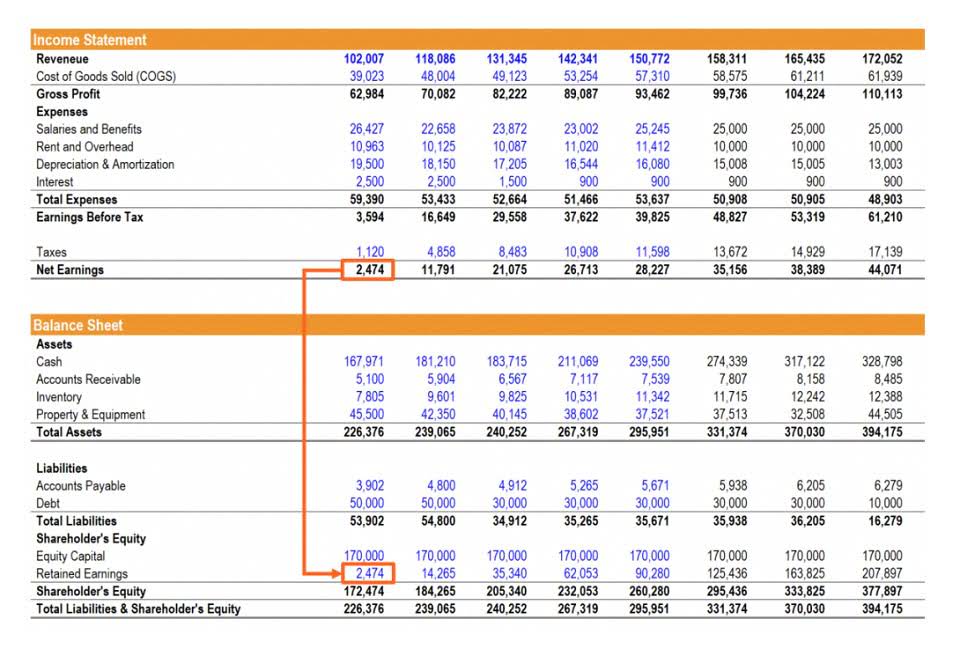
Attempt to negotiate better terms on leases and other fixed costs to lower total expenses. Review all of the costs you incur, and identify areas where costs can be reduced. If you can purchase a product through multiple suppliers, you can force the suppliers to compete for your business and offer lower prices. These two liquidity ratios are used to monitor times interest earned ratio formula cash collections, and to assess how quickly cash is paid for purchases. In this exercise, we’ll be comparing the net income of a company with vs. without growing interest expense payments. A December 3, 2020 FEDS Notes, issued by the Federal Reserve, summarizes S&P Global, Compustat, and Capital IQ data in Table 2 for public non-financial companies.
Join thousands of top business leaders today.
Create and enforce a formal collection process to avoid incurring bad debt expenses, which decrease earnings. This 2020 report from the Federal Reserve reports that the median interest coverage ratio (ICR) for publicly listed nonfinancial corporations is 1.59. As mentioned above, TIE is also referred to as the interest coverage ratio. Learn more about how to prep yourself for an SBA loan that can help grow your business and have cash reserves so that you can build better product experiences. When you sit down with the financial planner to determine your TIE ratio, they plug your EBIT and your interest expense into the TIE formula.
- If you’re a small business with a limited amount of debt, the times interest earned ratio will likely not provide any new insight into your business operations.
- This means that the business has a high probability of paying interest expense on its debt in the next year.
- The TIE ratio is always reported as a number rather than a percentage, with a higher number indicating that a business is in a better position to pay its debts.
- A company’s capitalization is the amount of money it has raised by issuing stock or debt, and those choices impact its TIE ratio.
- It gave the investors an idea of shareholder’s equity metric and interest accumulated to decide if they could fund them further.
- However, just because a company has a high times interest earned ratio, it doesn’t necessarily mean that they are able to manage their debts effectively.
- Divide the company’s earnings before interest and taxes (EBIT) by its interest expense to calculate the TIE ratio.
Applications of TIE in Decision-Making
A TIE ratio (times interest earned ratio) of 2.5 means that EBIT, a company’s operating earnings before interest and income taxes, is two and one-half times the amount of its interest expense. The interpretation is that the company is within its debt capacity with a low risk of not paying interest on its debt. To calculate TIE (times interest earned), use a multi-step income statement or general ledger to find EBIT (earnings before interest and taxes) and interest expense relating to debt financing. Divide EBIT by interest expense to determine how many times interest expense is covered by EBIT to assess the level of risk for making interest payments on debt financing.
- This indicates that Harry’s is managing its creditworthiness well, as it is continually able to increase its profitability without taking on additional debt.
- Investors and creditors use the TIE ratio to assess a company’s financial health, specifically its ability to pay interest on outstanding debts.
- This ratio can be calculated by dividing a company’s EBIT by its periodic interest expense.
- The relatively high TIE ratio means the company’s EBIT is 2 to 3 times its annual interest expense, which is a margin of safety for the risk of making interest payments on debt.
- Ultimately, you must allocate a percentage for your varied taxes and any interest collected on loans or other debts.
- Times interest earned ratio is a solvency metric that evaluates whether a company is earning enough money to pay its debt.
- Given these assumptions, the corporation’s income before interest and income tax expense was $1,000,000 (net income of $500,000 + interest expense of $200,000 + income tax expense of $300,000).
How to Calculate TIE
If earnings are decreasing while interest expense is increasing, it will be more difficult to make all interest payments. Company founders must be able to generate earnings and cash inflows to manage interest expenses. Keep in mind that earnings must be collected in cash to make interest payments.

What is considered a strong TIE ratio?
Monitoring the times interest earned ratio can help you make informed decisions about generating sufficient earnings to make interest payments, and decisions about taking on more debt. Rho’s platform is an ideal solution for managing all expenses and payments. If your firm must raise a large amount of capital, you may use both equity and debt, and debt generates interest expense. Lenders are interested in companies that generate consistent earnings, which is why the TIE ratio is important. Liquidity ratios analyze current assets and current liabilities, and current liabilities include interest payments due within a year.
Hunting For The Best Survey Software To Create Market Research Surveys?
At this point, a higher TIE ratio is generally better, as it signifies a stronger financial position and lower financial risk. Conversely, a TIE ratio below 1 suggests that a company cannot meet its interest obligations from its operating income alone, which is a cause for concern. The TIE ratio provides a clear picture of how many times a company can cover its interest expenses with its operating profits. For example, if a company has an EBIT of $500,000 and an interest expense of $100,000, its TIE ratio would be 5. This means the company’s operating profit is sufficient to cover its interest expenses five times over, indicating a healthy financial position.
- Reducing net debt and increasing EBITDA improves a company’s financial health.
- This can inspire confidence in pursuing opportunistic growth strategies or engaging in mergers and acquisitions, backed by a solid foundation of interest-earning ability.
- This situation can potentially lead to financial distress, credit rating downgrades, or even default, which can have severe consequences for the company’s operations and reputation.
- This could potentially result in harsher loan terms or the increased likelihood of defaulting on obligations.
- For example, if your business had a times interest earned ratio of 4 times, it would mean that you would be able to repay your interest expense four times over.
Any chunk of that income invested in the company is referred to as retained earnings. A TIE ratio of 5 means you earn enough money to afford 5 times the amount of your current debt interest — and could probably take on a little more debt if necessary. As a general rule of thumb, the higher the times interest earned ratio, the more capable the company is at paying off its interest expense on time (and vice versa). If investors are looking to put more cash into your account, they will be happy to find that the TIE ratio figure is high. That means that, in 2018, Harold was able to repay his interest expense more than 100 times over. That all changed in 2019, when Harold took out a high-interest-rate loan to help cover employee expenses.